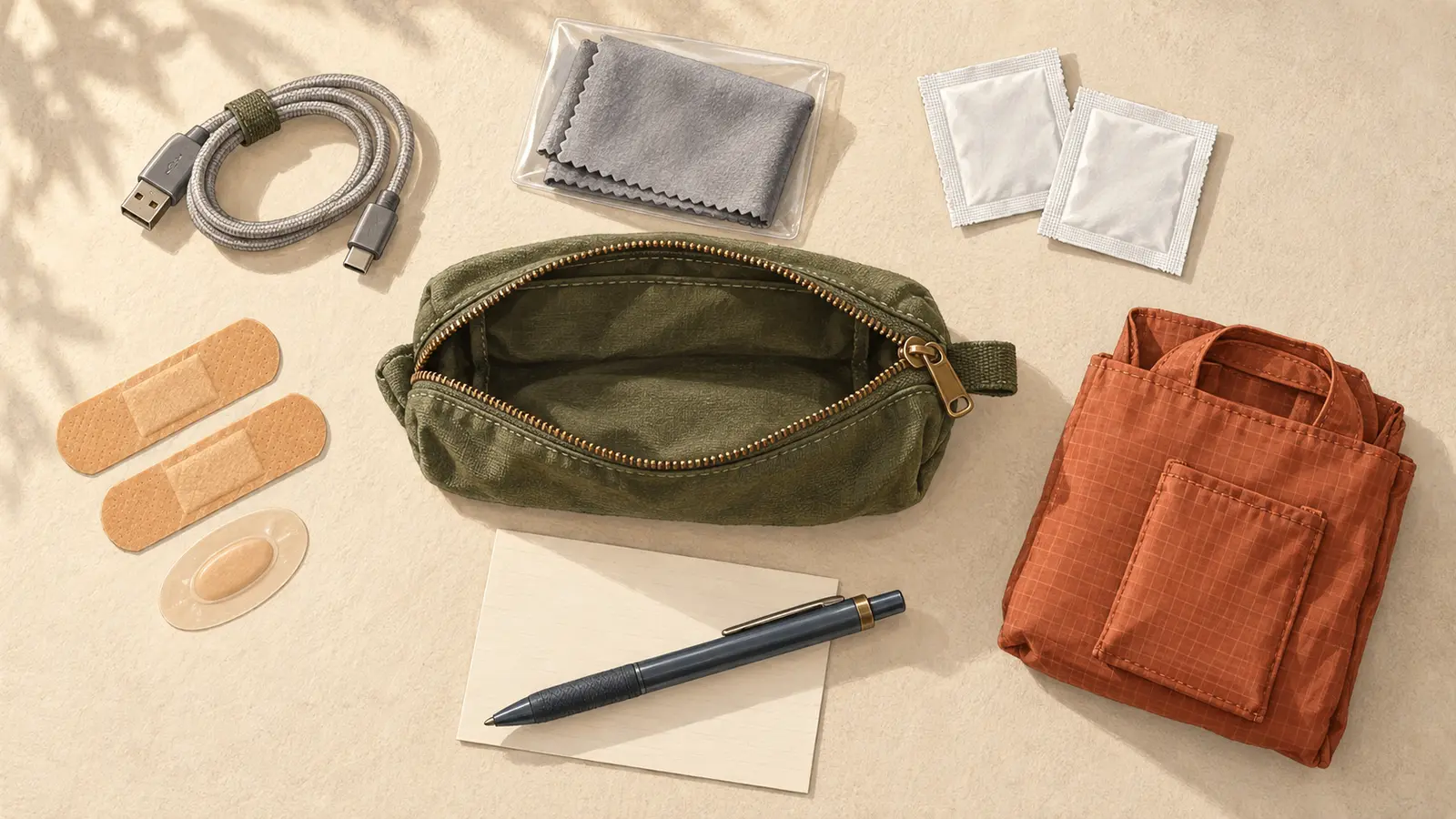
A useful everyday bag is not a miniature emergency bunker. It is a place for the small things that rescue an otherwise ordinary afternoon: the cable you did not leave beside the bed, the bandage you can find before your shoe wins, the tote that appears when a paper pharmacy bag starts tearing in the rain.
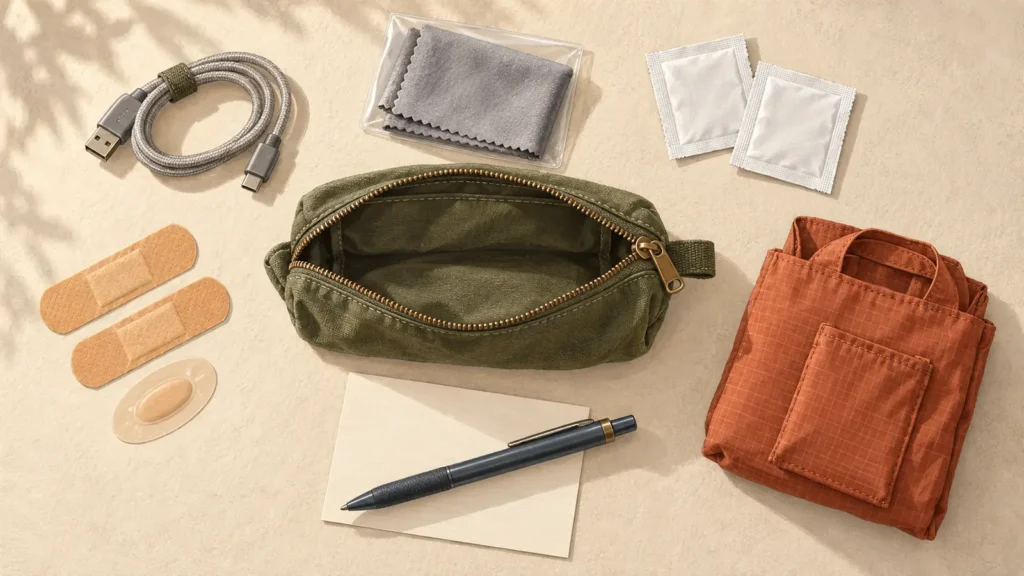
For most people, six items are enough: a dedicated charging cable, a protected microfiber cloth, two stain-remover wipes, a few bandages, a small pen with an index card, and a fold-flat tote. Put them in one zippered pouch. The pouch matters almost as much as what goes inside it, because loose “essentials” have a way of becoming bag-bottom archaeology.
Six things that earn the space
1. A charging cable that lives in the bag
The important word is lives. If you move your bedside cable into your bag every morning, sooner or later it will be beside the bed when your phone reaches 9%.
Choose a short cable that fits your phone and the places where you actually recharge. A USB-C-to-USB-C cable is no help if the port you usually borrow is the older rectangular USB-A type; check before buying. A small wall plug may also deserve a place if outlets are easier to find than charging ports on your usual route.
This is not a promise of power wherever you go. It simply removes the particularly annoying situation in which a usable port is right there and your cable is at home.
2. A clean microfiber cloth in a sleeve
Glasses, sunglasses, and phone camera lenses all collect fingerprints at exactly the wrong moment. A small optical microfiber cloth clears them without the lint left by many tissues and napkins.
Keep it in its own sleeve or tiny resealable bag. A cloth rolling around with crumbs and grit is no longer the gentle option. Shake off any visible particles before wiping, and follow the lens maker’s cleaning advice if your glasses have a special coating.
3. Two individually wrapped stain wipes
One coffee drop can occupy far more attention than its size deserves. A sealed stain-remover wipe lets you deal with it while it is fresh and does not add a bottle of liquid to your bag.
Blot first instead of grinding the stain into the fabric, then follow the packet directions. Delicate, dry-clean-only, leather, suede, and color-sensitive fabrics may need different treatment, so the wipe is not an invitation to scrub first and investigate later.
Why two? One for you, and one because the first packet may already have dried out—or because coffee is sociable.
4. Two regular bandages and one blister bandage
A paper cut needs an ordinary adhesive bandage. The hot spot forming on your heel needs something cushioned that reduces rubbing. Carrying both is more useful than stuffing the pouch with ten versions of the same bandage.
Keep them sealed and flat. A hydrocolloid blister bandage generally adheres best to clean, dry skin; use it according to its package directions, particularly if the blister has already opened. If you have diabetes, poor circulation, or a wound that looks infected, this little bag kit is not the right level of care.
5. A compact pen and one index card
Your phone is usually the better notebook—until you need to leave a note, fill in a paper form, hand someone an address, or keep the phone free while taking down information.
A short capped or retractable ballpoint is less likely to decorate the inside of your bag with ink. Pair it with one index card, folded if necessary. Do not use the card for passwords, PINs, or anything you would regret losing with the bag.
6. A fold-flat tote
This is the item you may ignore for weeks and then use three times in one day. A lightweight nylon tote handles an unexpected grocery stop, a library book, a takeout container that should remain upright, or the contents of a paper bag whose handles have surrendered.
Look for one that folds into its own attached pocket. If the storage pouch is separate, it will eventually become a seventh loose item with no obvious purpose.
The pouch is what makes the kit work
Use a zippered pencil case, small fabric pouch, or compact mesh organizer—whatever opens easily and fits the bag you carry most often. The six items should be visible without emptying the pouch onto a table.
When you switch bags, move the whole pouch. That is the real advantage of the system. You are not maintaining three half-stocked collections or wondering which tote contains the good pen.
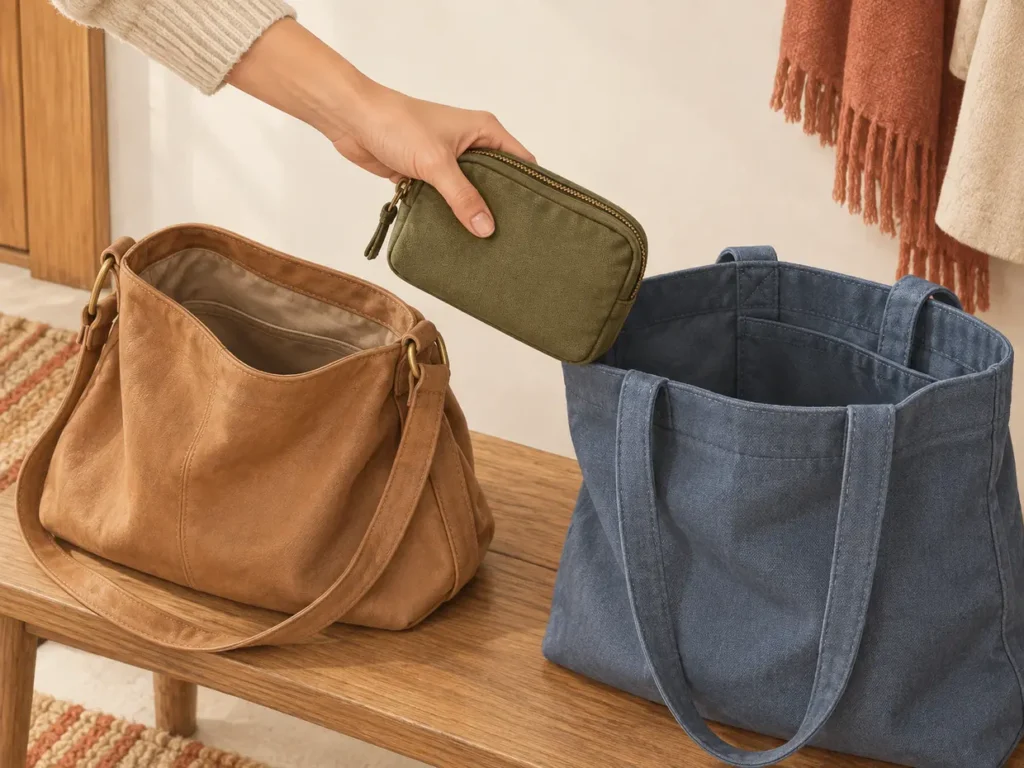
You can also adjust the kit to your actual life. Someone who wears contact lenses may add rewetting drops. A parent may need a spare hair tie. A commuter with an unpredictable trip home may value a small power bank more than the index card. The test is not whether an item appears on an “everyday carry” list. It is whether you use it often enough to justify carrying it.
What can stay out
Heavy gear should have to argue its case. A large power bank is useful on travel days, during long outdoor events, or when outlets are unreliable; it may be dead weight on a two-hour errand. If your phone frequently runs low before you get home, though, carry a charged compact one. Your routine gets the deciding vote.
Multi-tools with blades can create problems at airports and at venues with security screening. Unless you regularly need the tool and know where it is permitted, it is a poor default for an everyday bag.
Medication is not a decluttering decision. Carry what you may need, store it as your pharmacist or clinician recommends, and keep prescription medicine properly identified. Do not move pills into an unlabeled bag simply to save space.
Give it five minutes every three months
Open the pouch and remove old receipts or notes. Replace used or damaged bandages and wipes, check the dates and packaging on anything that can expire or dry out, test the pen, and confirm that the cable still matches the device you carry.
That is enough maintenance for a kit this small. If the pouch starts bulging, take out the items you have not used and do not expect to need. The goal is not to be prepared for every possible mishap. It is to solve the few minor problems that keep happening without turning your shoulder bag into luggage.